Friday, February 8, 2019
Today we ventured down to the beach side of town, El Cabanyal. Our mental model is Barcelona and it’s vibrant and extensive beach front, Barceloneta.
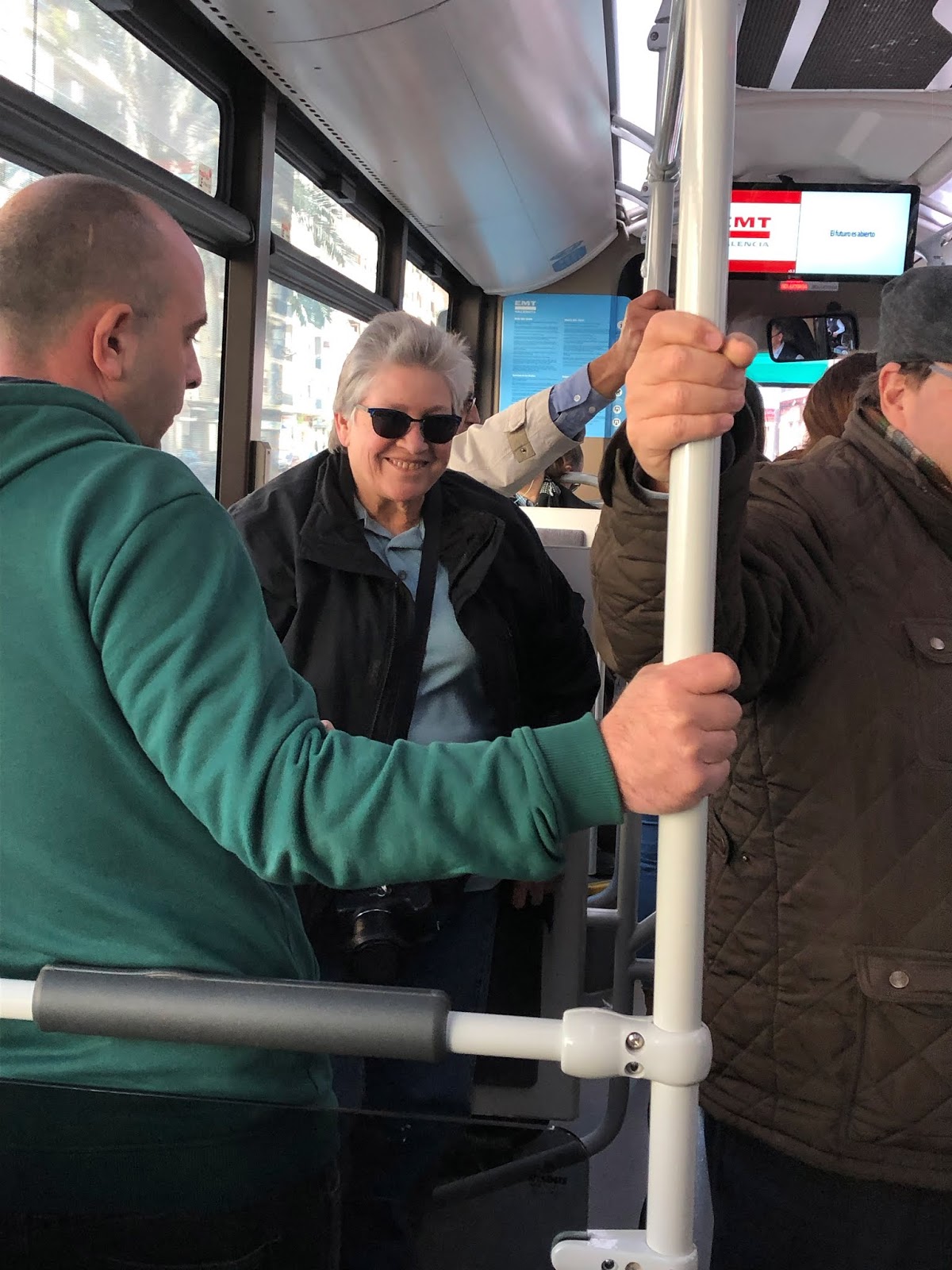
We rode the bus down, which meant the trip took about 40 minutes. It’s a lot farther from the city center than Barcelona. The bus was crowded, and even though this was a lovely, sunny Friday, we seemed to be the only tourists. If this were a warm winter day in BCN, we’d be surrounded by tourists heading for the beach.
On the bus you have to get up and give your seat up for old people. As I watch the people get on I think, “I’m just as old as she/he is”. What a realization.
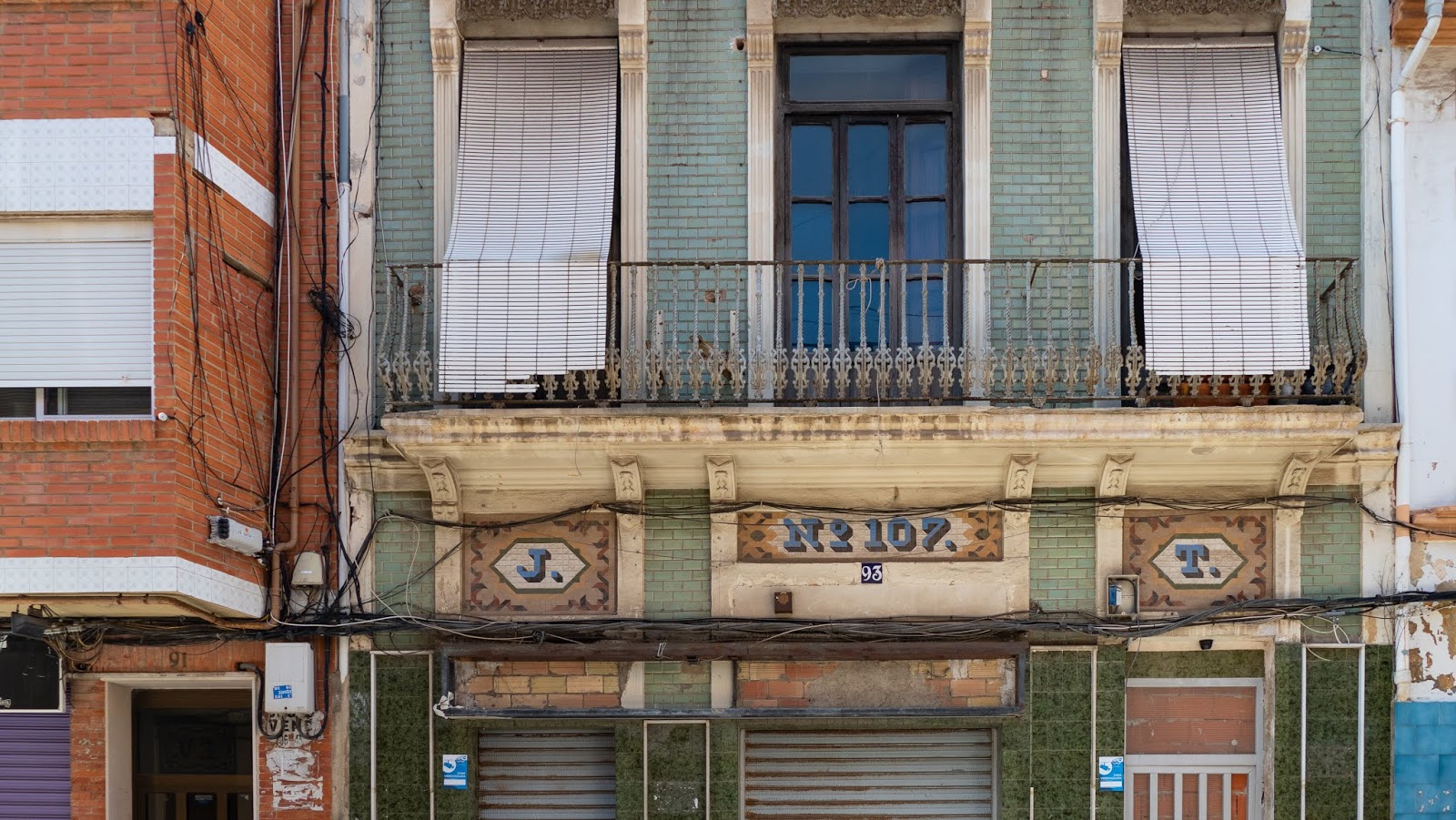
We got off the bus at the center of the district. There was a market we had just passed, but we headed for the beach, which was a few blocks away. No restaurants or other signs of tourism. I looked off to the side, and we were instantly drawn. The buildings were no more than two stories and quite small, but wonderfully unique in their architectural details and colors. Every building seemed a photo opportunity, though things were definitely past their heyday.
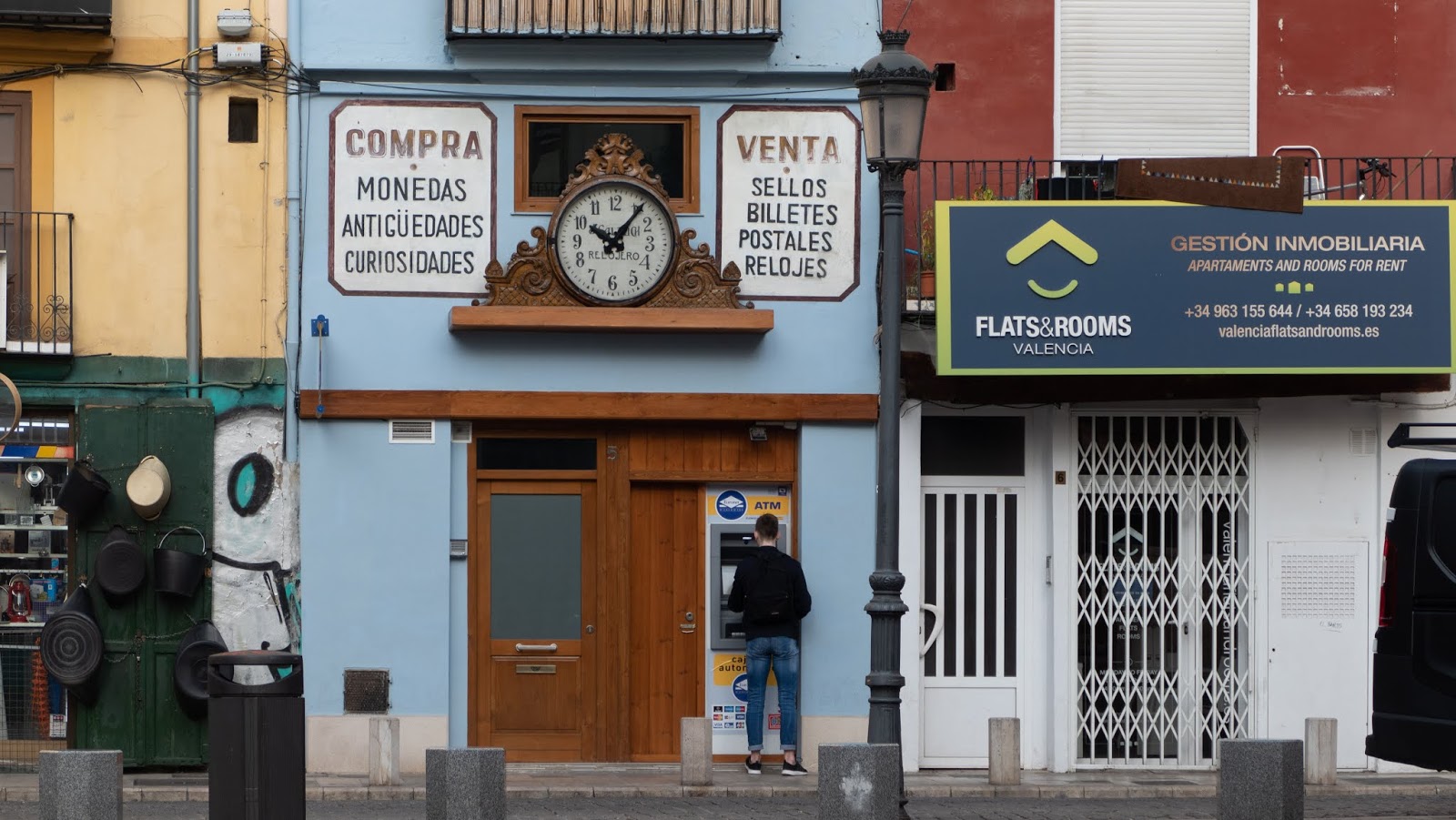
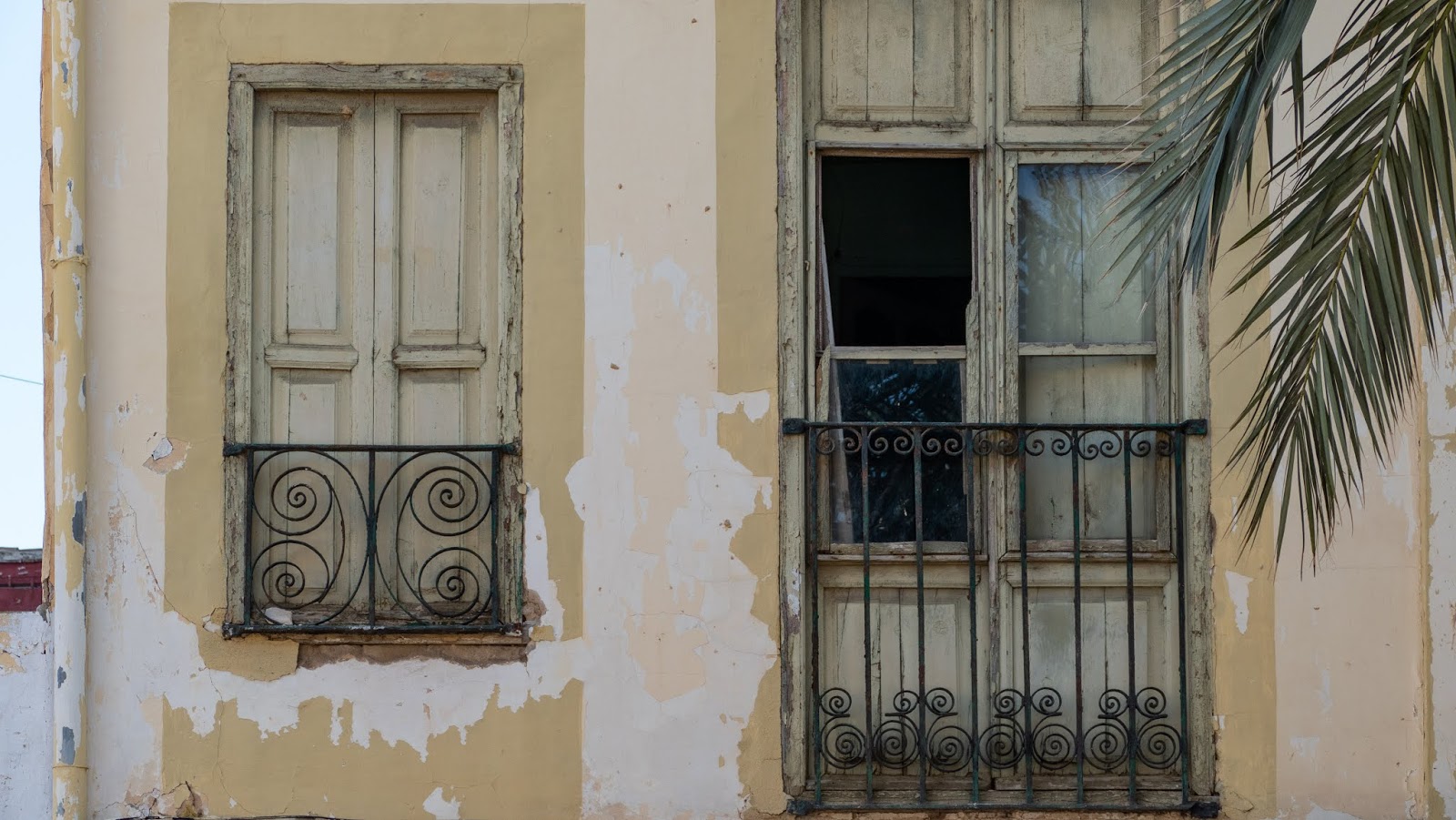
This was a poorer cousin to the Valencia we thought we knew. Yes, there was some construction, but rather than the oversized, elaborate architecture of the old city, this was a lived-in, life-sized, poor and partially abandoned neighborhood. It had very little in common with Barceloneta except perhaps the ocean front. Most buildings were boarded up. We went past what would have been a government housing high rise at home with kids kicking a soccer ball around in an empty and dusty lot. We passed one restaurant specializing in fried food—decidedly local.
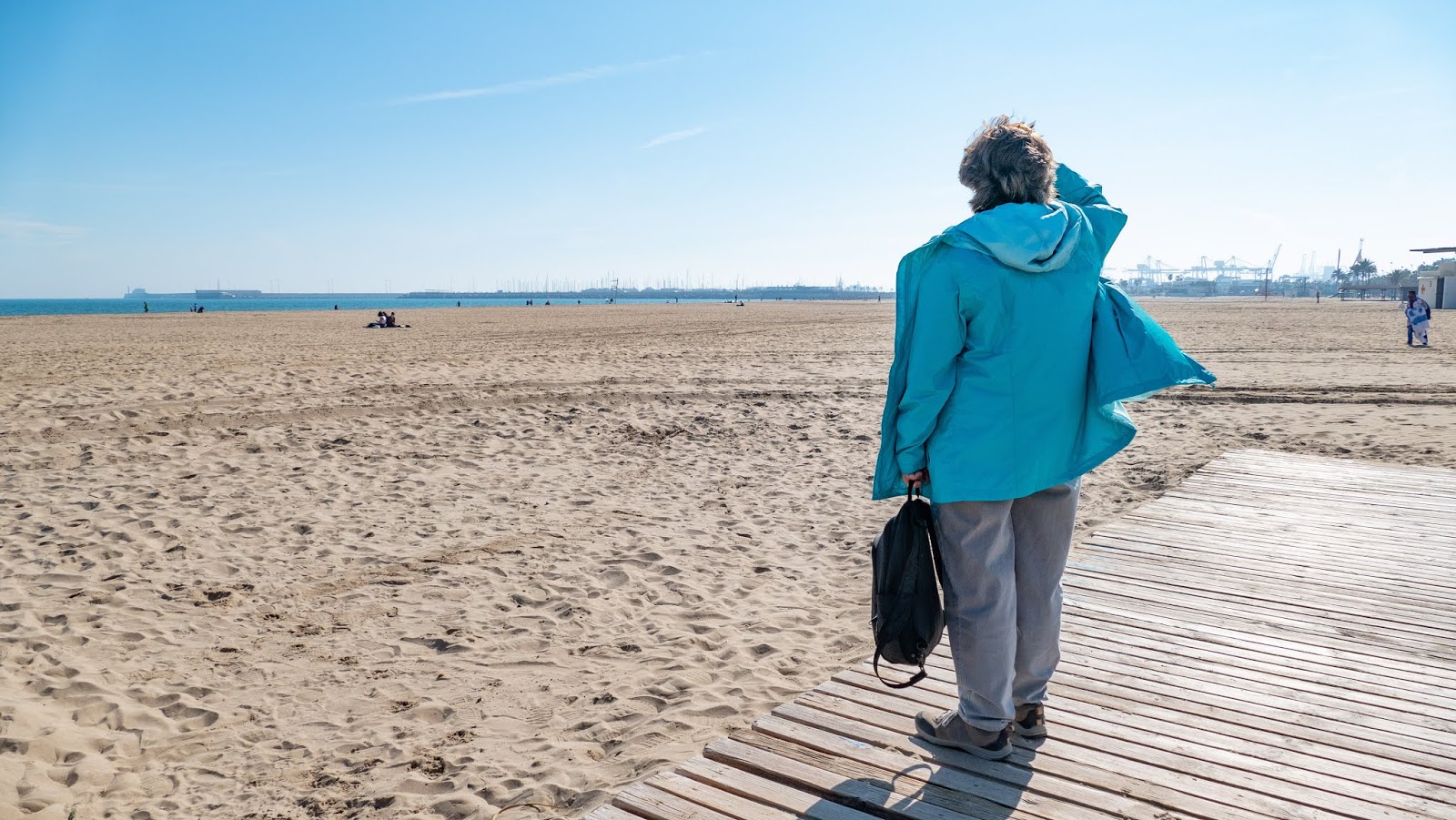
We made our way to the seaside. There was an expansive beach and wide paths and bikeways along the shore, but no restaurants or other development. We follow a board walk half way to the water and peruse the largely deserted scene. There is an empty trolley patrolling the shore as though hungry for tourists. We walk along the shore and then decide to head for a recommended restaurant.
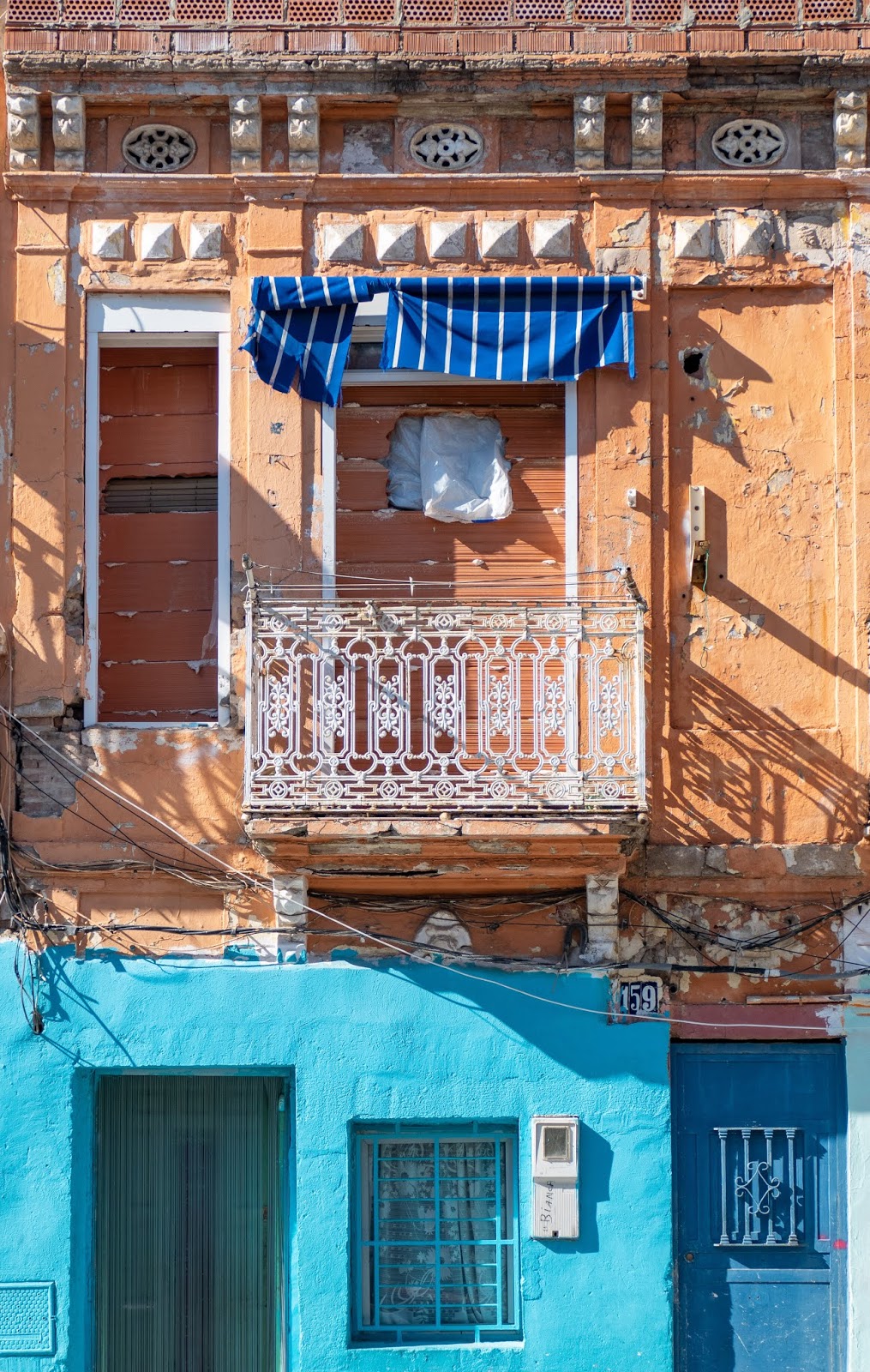
The route seems to take us in circles, past more local restaurants, but also through some decidedly sketchy neighborhoods. There’s a short row of one-story dilapidated houses facing the ocean, painted a spectrum of broad, albeit faded, colors. A woman stood and spoke to a neighbor on her balcony above and then a man joined in the conversation. Still a sense of neighborhood and community.
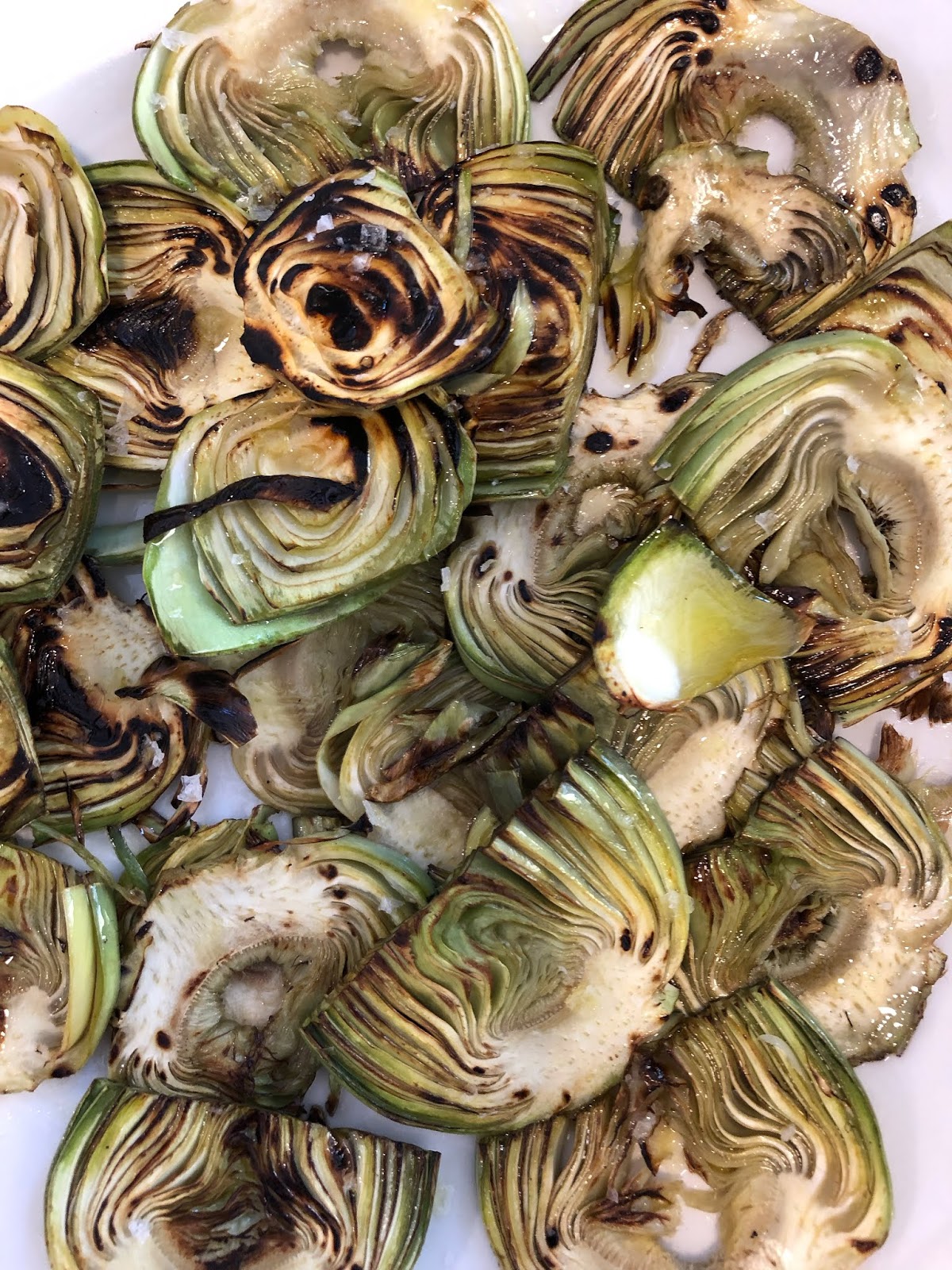
At last, we come across our restaurant, Casa Montana. It’s clearly the one fancy restaurant in town. They have one remaining table in the dining area, and we take it. The food is really great. It’s not haute cuisine, but stew-based home cooking. We share local fava beans, cuttlefish in onion sauce, a Priorat white wine, grilled baby artichoke, potato “Brava,” raw tuna, flan and orange deserts and expresso. The waitress is very attentive, and the atmosphere is buoyant with every table taken. Back out on the streets, things look deserted and sad. We make our way to the closest bus stop and get seats this time. The stop is very close to our apartment.
We siesta, and intend to go back out to see the city at night, but once again, find ourselves engaged enough with the blog and processing photos and fixing dinner. We read about the history of the area, how the main city has eyed the potential of development in El Cabanyal and envisioned the future with a direct boulevard from city center to ocean. The community fought back to preserve the buildings that would have been destroyed with the construction. The neighborhood and city were apparently locked in this battle for years and the end result is a downtrodden area with the historical area rightfully preserved, but no longer maintained.
Reading the history puts things into perspective.
 K & L's Travel Blog